I Flew to 4 Cities in 5 Days. Here's the One Thing That Kept Me Productive.

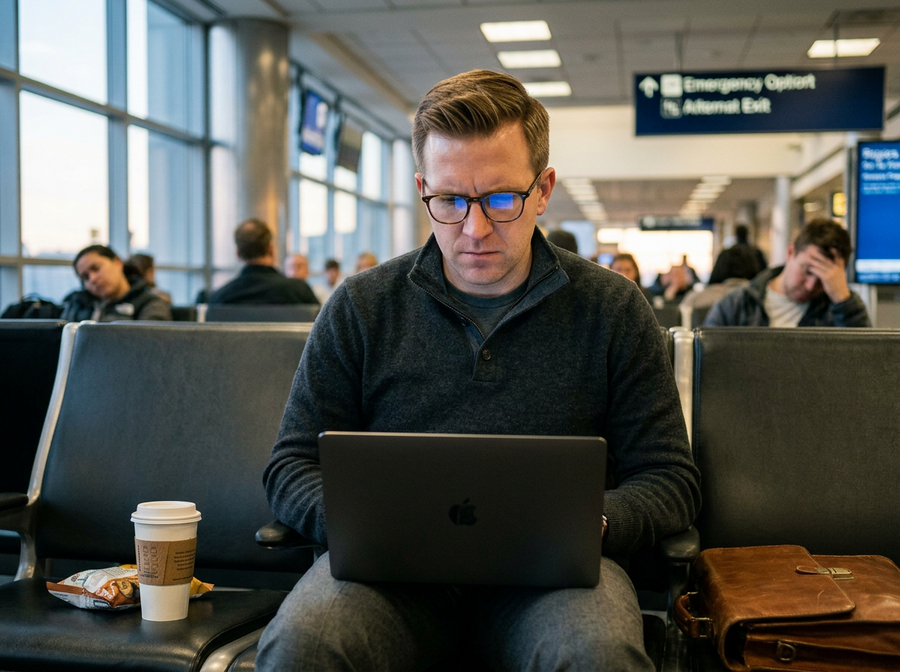
Last October, I was at gate B7 in O'Hare at 5:45am, toggling between three spreadsheets and a slide deck on a 14-inch laptop screen, copying numbers from memory, neck killing me, client presentation in four hours.
I manage teams across three time zones. I run projects worth millions of dollars.
And I was squinting at a 14-inch screen like it was 2003.
That morning I stopped pretending my travel setup was fine.
The week that made it obvious
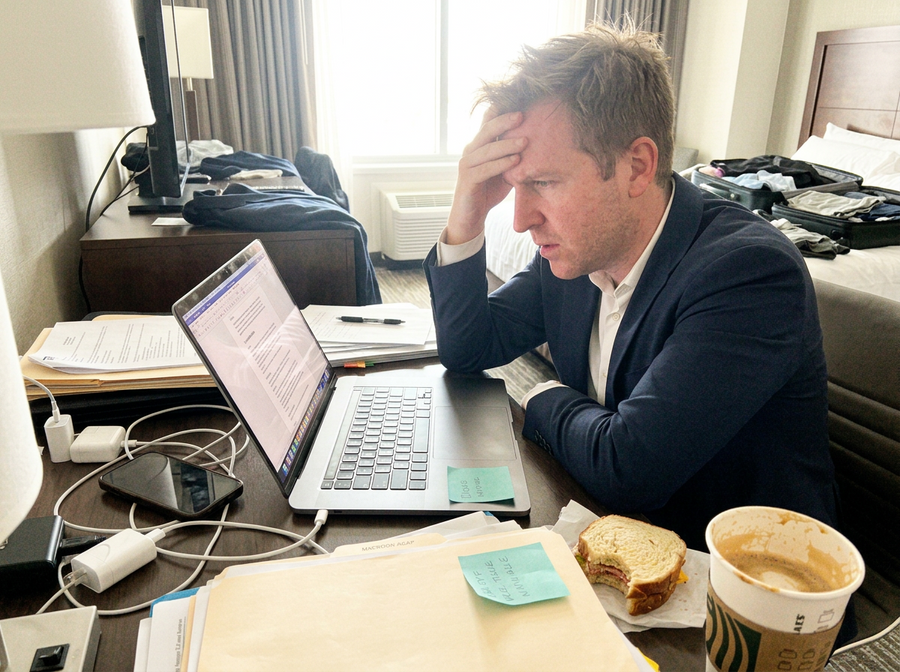
Monday in Dallas: 40 minutes turning a hotel desk into something resembling a workspace. Phone propped up as a sad excuse for a second screen.
Tuesday: Client presentation, 47 slides. I could show the slides or look at my notes. Not both. The CTO noticed me pausing to check printed pages.
Wednesday: A comparison model that takes 20 minutes on my home desktop took over an hour in the hotel room. Tab switching. Losing my place. Re-checking numbers I'd already verified.
Thursday: Video call with the full client team. Screen share took up my whole display. Missed three questions in the chat. The laptop webcam was pointing straight up my chin. Had to follow up by email, which made me look unprepared. Probably was unprepared.
Friday: I needed to compare two versions of a report. I printed both and spread them across the hotel bed. Like an animal.
Every single problem that week came from the same thing: I was trying to do desktop-level work with laptop-level equipment.
The fix I almost ignored
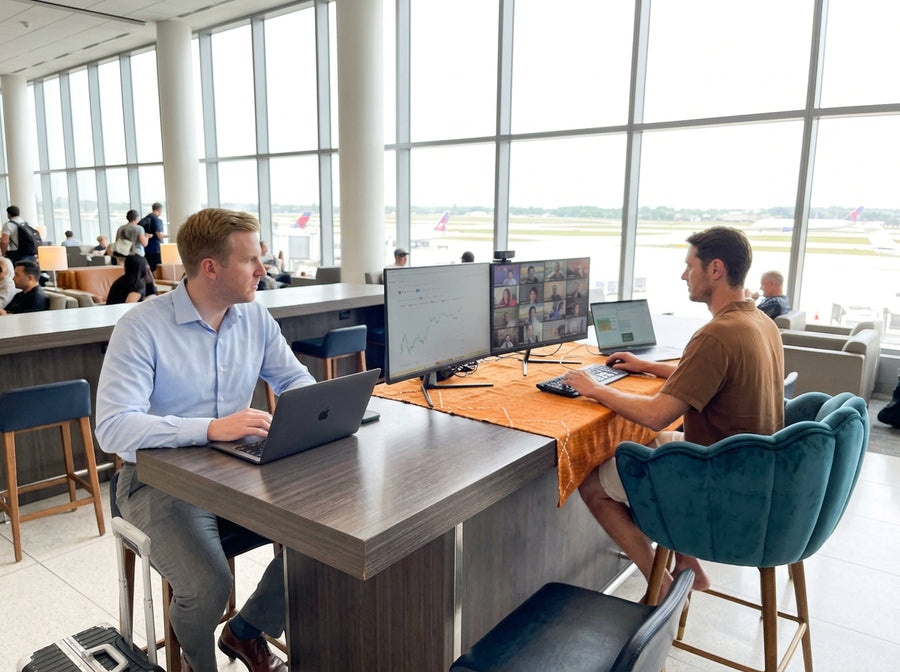
I found it through a random conversation in an airport lounge in Charlotte.
The guy across from me opened a trunk. Within a few minutes he had two full screens set up on the lounge table. A real keyboard. A mouse. A webcam mounted at eye level. Everything running through a single hub. He looked like he was sitting at his office desk, except he was at gate C12.
I stared for a solid minute before I said anything.
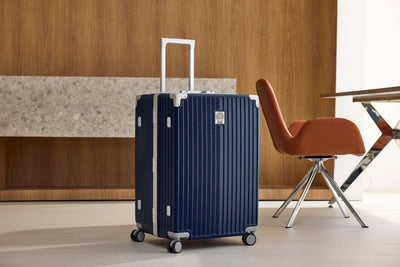
He told me it was called the Ramble Destination Travel Trunk. A travel trunk that carries a complete workstation: two 1080p screens, full keyboard, mouse, webcam, hub, and adapter, all secured in a patented organizer on one side, clothes and personal items on the other. One bag. Full office. Setup in under five minutes.
My first reaction was skepticism. I'd been burned by "portable office" products before. But the guy wasn't fiddling with cables trying to get things to work. He opened the trunk, connected his laptop, and he was working.
I ordered one that night.
What happened on the road
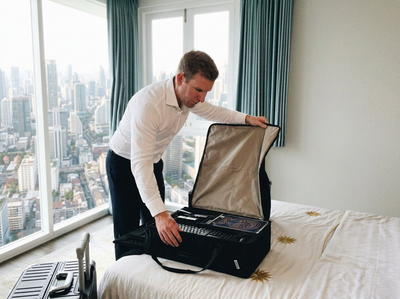
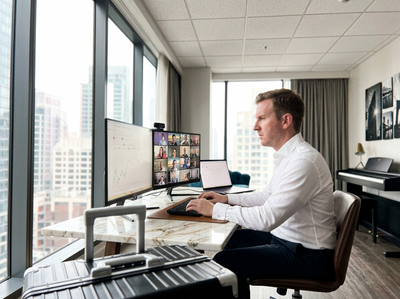

Four cities, five days, one trunk.
I ran a full five-day trip to test it. Chicago to Phoenix. Phoenix to Houston. Houston to Atlanta. Atlanta back to Chicago.
Phoenix, Day 1. Opened the trunk. Two 1080p displays flanking my laptop. Real keyboard. Mouse. Webcam at eye level. My first thought: this is what my home office looks like. My second thought: I'm in a Holiday Inn.
Houston, Day 2. Financial model on the left screen. Client requirements doc on the right. Email on the laptop in the middle. That same model that took me over an hour last week? Done in 25 minutes.
Atlanta, Day 3. Full C-suite video call. Screen share on one monitor, call participants visible on the other, notes on my laptop. Webcam at eye level. I was looking straight into the camera for the first time on a road call. Caught every question in real time. The client's CFO said "nice setup" mid-call. Afterward, my project lead messaged me: "That was your smoothest client presentation in months." She thought I was at a coworking space. I was at a Marriott.
Heading home, Day 4. Packed everything back in three minutes. Checked the trunk. Walked through O'Hare with just my backpack. And realized: I wasn't exhausted. For the first time in years, the week felt like working, not surviving.
What actually changed
The specs matter less than what they produce.
I used to finish a travel week knowing my work was 20 to 30% worse than what I'd produce at home. Not because I tried less. Because I couldn't see what I was doing.
Two documents to compare? Now they're side by side. I spot in seconds what I used to miss entirely.
Client video calls? I'm looking straight at the camera. Clients stopped asking "are you traveling?" They just assume I'm at an office.
Presentation prep the night before? I review at full resolution across two screens. No more surprises in the meeting.
The quality gap between my home office and my hotel room is gone.
"Isn't this just more luggage?"
Before the Ramble Destination Travel Trunk, I traveled with a rolling carry-on, a laptop backpack, and sometimes a separate bag for a portable monitor, with cables and adapters scattered across all of them. Three or four pieces. None of it added up to a real workstation.
Now it's two pieces. The trunk and my backpack.
Is the trunk bigger than a carry-on? Yes. I check it. The aluminum frame and polycarbonate shell mean I don't worry about damage. TSA-approved locks. I walk through the airport with just my backpack and have a full office in five minutes at the hotel.
That trade-off is obvious.
The bottom line
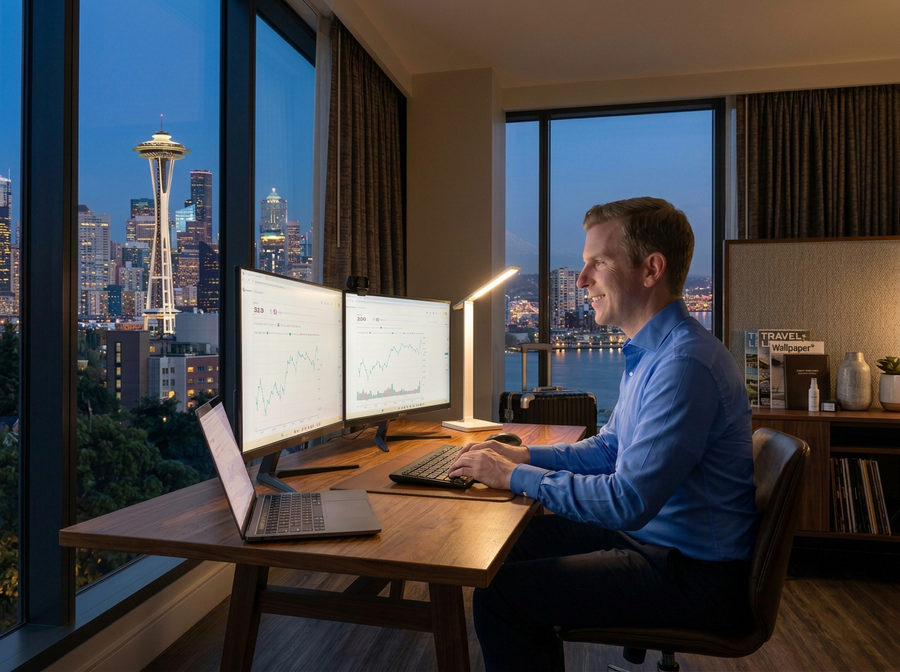
I spent eight years accepting that road work meant worse work. Smaller screen, slower workflow, lower quality output. I told myself that's just how business travel is.
It's not. I was just carrying the wrong things.
If your job requires a proper setup and your travel setup is a laptop, the Ramble Destination Travel Trunk closes that gap. Two screens, real keyboard, proper mouse, webcam at eye level, packed and protected in one bag, set up in five minutes, same output whether you're in Chicago or a Marriott in Houston.
If you've ever compared two documents by spreading printouts across a hotel bed, or missed a client's question because your screen share took up your whole display, or seen yourself on a video call and realized the camera was pointing straight up your nose...
You already know the problem. This is the fix.

About the author
Matt Brennan
Senior Management Consultant
Matt Brennan is a senior management consultant based in Chicago. He leads digital transformation projects for Fortune 500 companies across North America and Europe.